Clinical and compliance
Verified from admission wristband to administered dose
Ahearn & Soper builds the identification infrastructure Canadian hospitals, clinics and labs rely on: wristbands printed at admission, specimen and dose labels that stay legible, and devices rated for the disinfectant wipe they meet between patients. One team specifies, integrates, trains and services all of it, so the scan at the bedside matches the order in the chart.
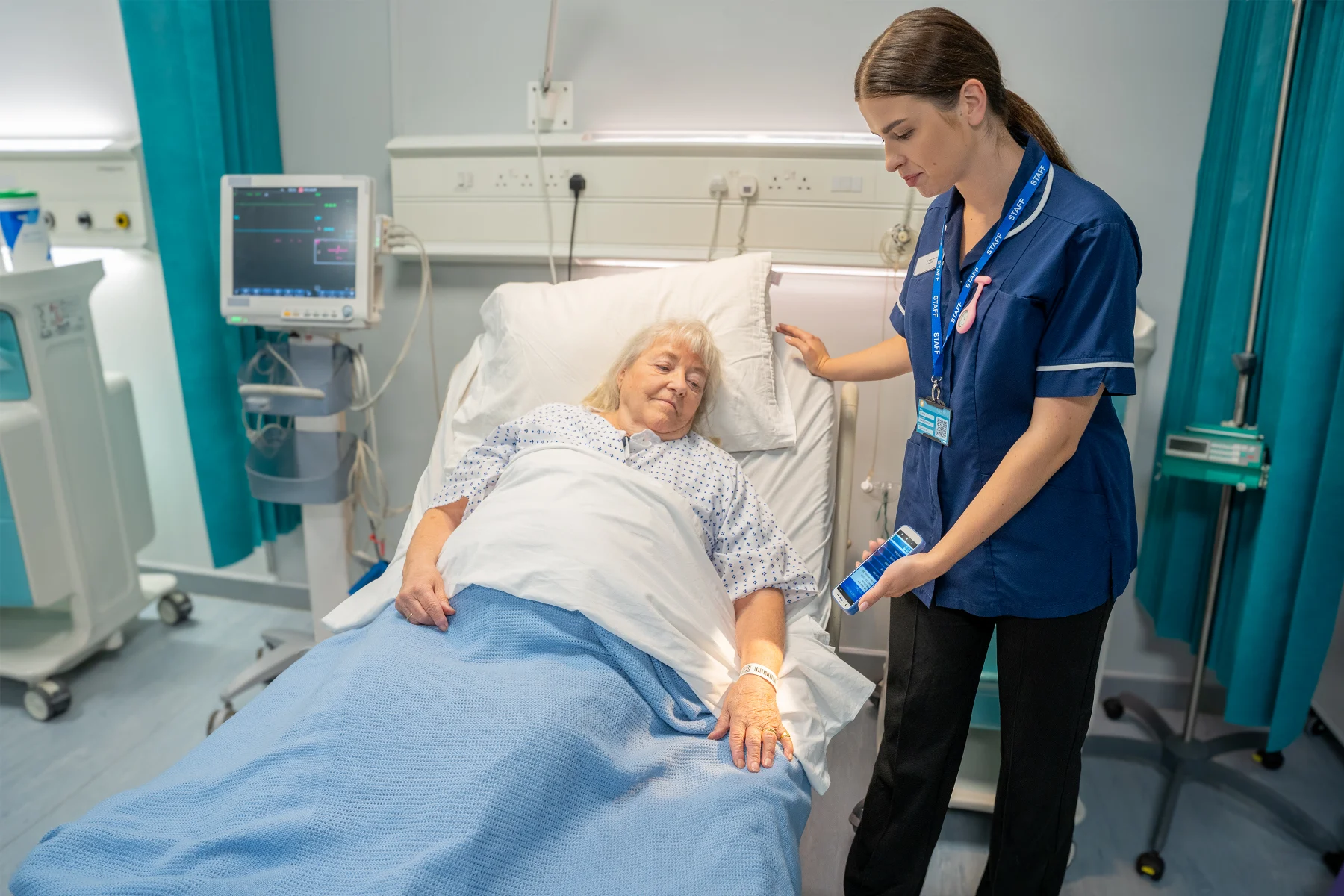
Where the money leaks
Most of what goes wrong in a hospital's identification chain goes wrong in the same few places. Each one starts as a gap between what was ordered and what was actually given, and each one is hardest to answer for after the patient has left the ward.
- Positive patient identification that rests on a name check rather than a scan that verifies
- Medication and specimen steps where a manual match is the only thing standing between an order and an error
- Equipment that gets searched for across departments and shifts instead of located
- Staff and visitor access that has to be fast, secure and auditable, running on a laminator
- Standard hardware that fails the disinfection protocol the ward runs several times a day
How we solve it
Ahearn & Soper specifies, integrates, trains and services the whole chain: the wristband printed at admission, the scan that verifies it at the bedside, the label a repackaged dose carries, the devices that track specimens and assets, and the badge on a staff lanyard. Five parts, one team accountable.
Printers and mobile computers rated for the ward
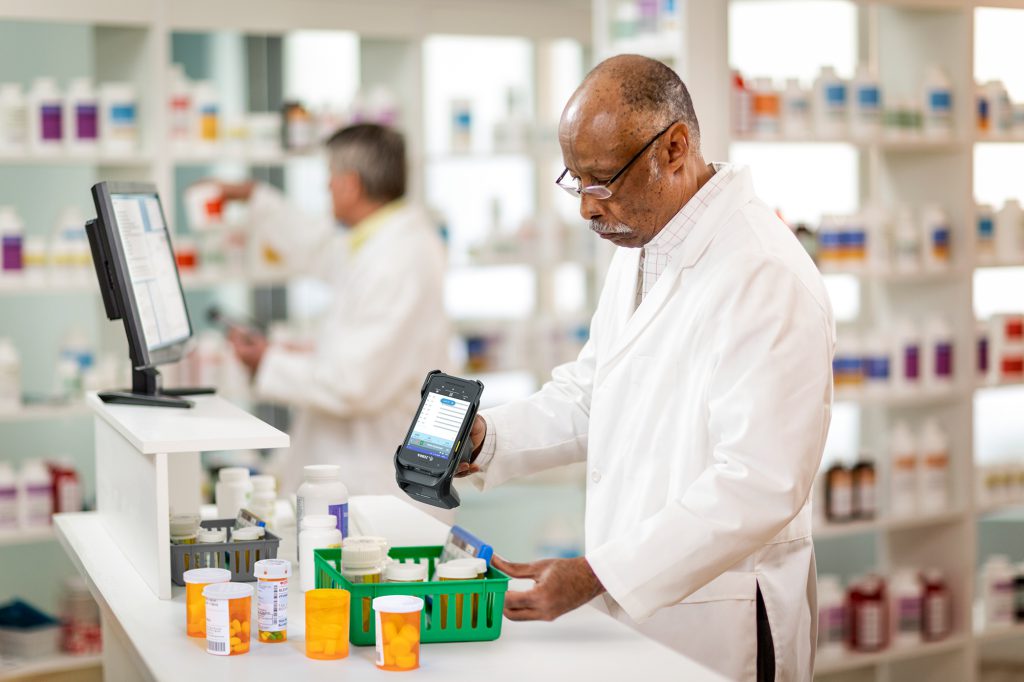
A device that goes from bedside to bedside meets a disinfectant wipe several times a shift, and a general purpose housing crazes and fails under that. Healthcare models ship in sealed, wipe rated housings for exactly this reason, which is why they are a different product rather than a colour option.
Wristbands and the scan at the bedside
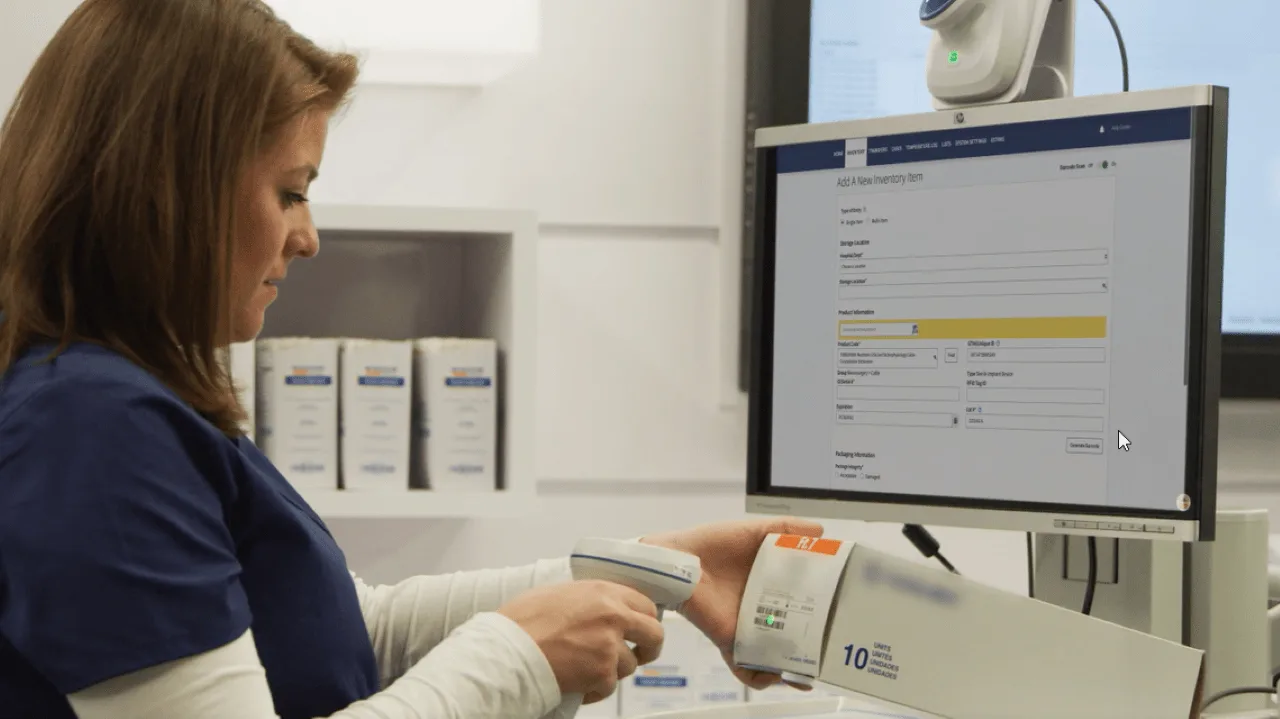
Positive patient identification only closes the loop if the wristband still scans on day three, after showers, sleeves and tape. The band, the printer and the scanner have to be specified together, because a band that prints beautifully and reads poorly fails at the only moment that counts.
Unit of dose repackaging, and proving it scans
Nobody mandated a barcode at the unit of dose, so hospitals that want the bedside scan to work repackage and print their own, which makes the pharmacy a print shop. Doing that properly needs the right printer, a symbol that is graded rather than merely scanned, and a verifier that says so.
Specimen and asset tracking
A specimen labelled at the draw and scanned at the bench is traceable, and one labelled later from memory is not. The same scanners and RFID readers that keep that chain intact also stop an infusion pump being searched for across three floors.
Staff and visitor identification
Badging is a system rather than a laminator, and Ahearn & Soper is an Entrust Gold partner for the card and ID printing hardware behind it. Card printers sit outside the label printer range shown below, so that conversation starts with a specialist rather than a product page.
Products that fit this work
These are the scanners, mobile computers and printers we put into Canadian healthcare operations most often. Filter by device type or sort the list to find what you are looking for. Card and ID printers are not in this list, because they are a separate range and a separate conversation.

Honeywell Xenon Ultra 1960h Healthcare Scanner
The corded healthcare Xenon Ultra, for fixed clinical workstations and lab benches.
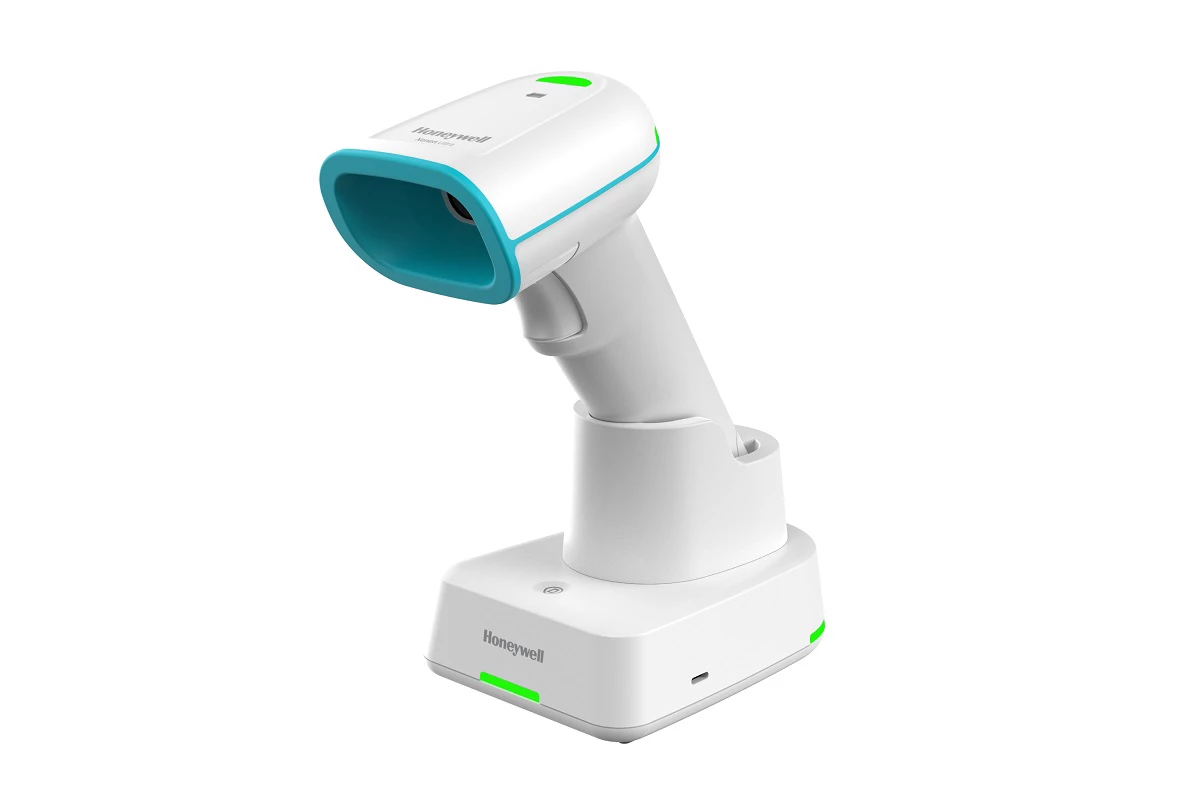
Honeywell Xenon Ultra 1962h Healthcare Scanner
The cordless Xenon Ultra in a disinfectant-ready housing, for bedside and lab use.

Honeywell Xenon XP 1952h Battery-Free Healthcare Scanner
Healthcare cordless with no battery. Charges in under a minute, nothing to replace or dispose of.

Honeywell Xenon XP 1952h Healthcare Scanner
Cordless healthcare scanner a tier below the Xenon Ultra, in a disinfectant-ready housing.
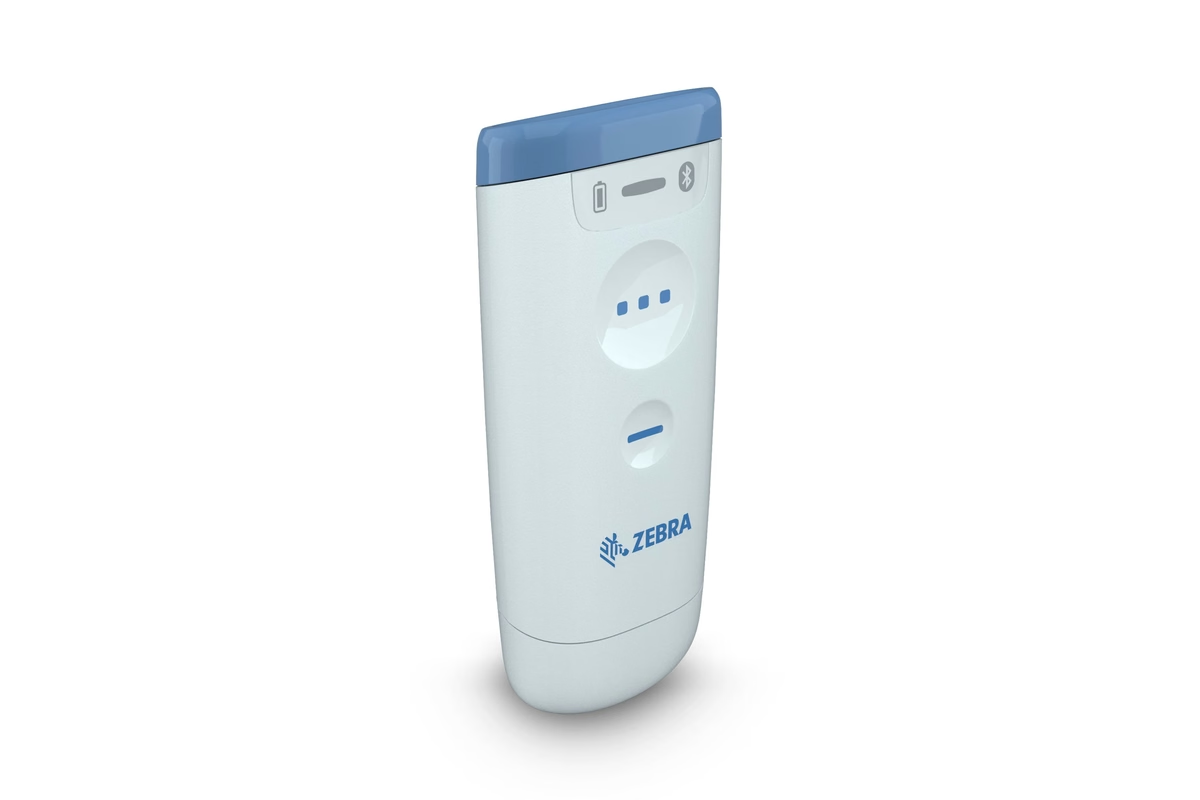
Zebra CS60-HC
Pocketable companion scanner for clinician workflows, usable corded or cordless over Bluetooth.
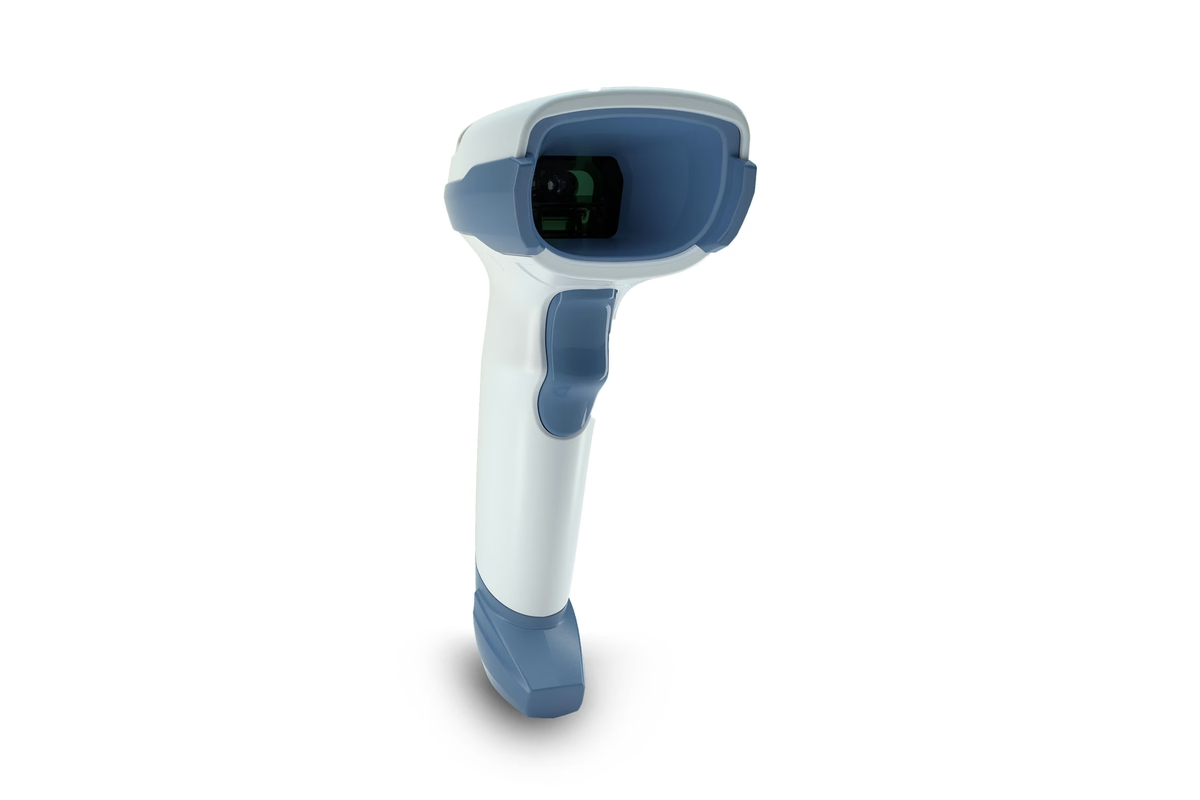
Zebra DS4608-HC
Corded healthcare handheld imager with a disinfectant-ready housing and IP52 sealing.
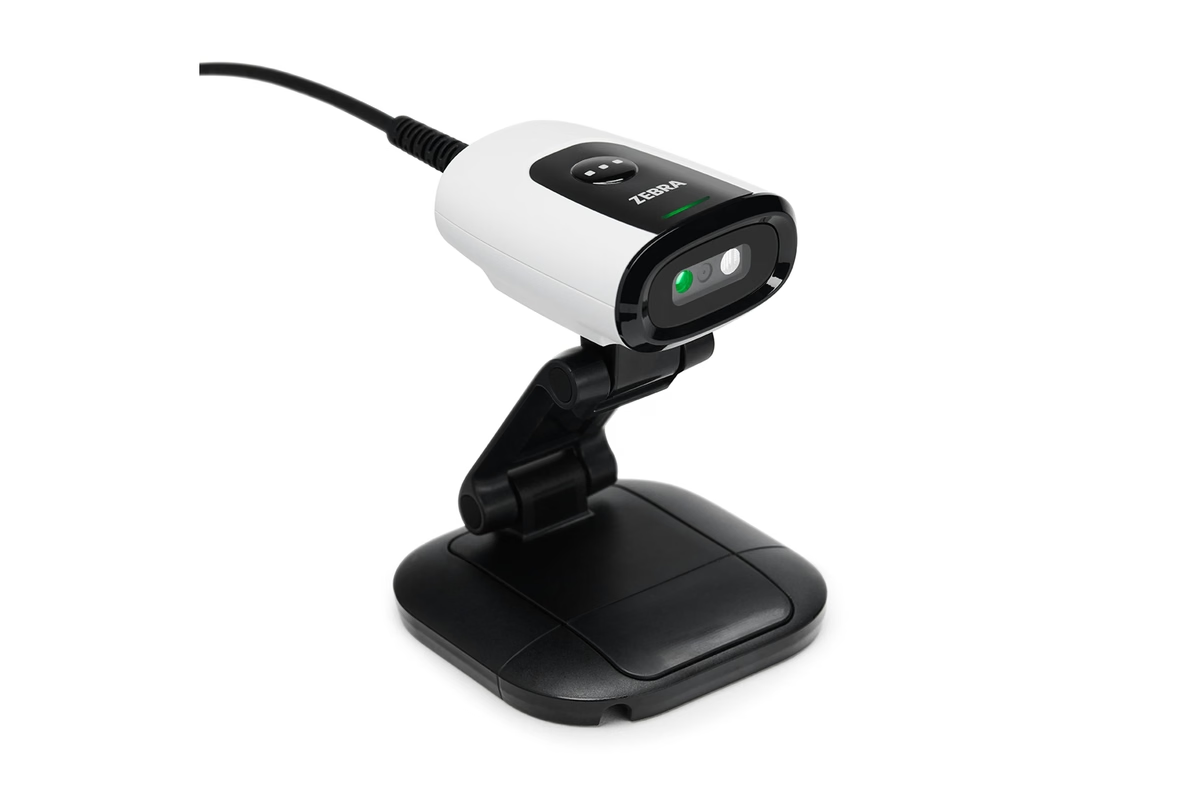
Zebra DS5502-LB
Compact fixed mount imager for labs, pharmacies and patient check-in, sealed to IP54.
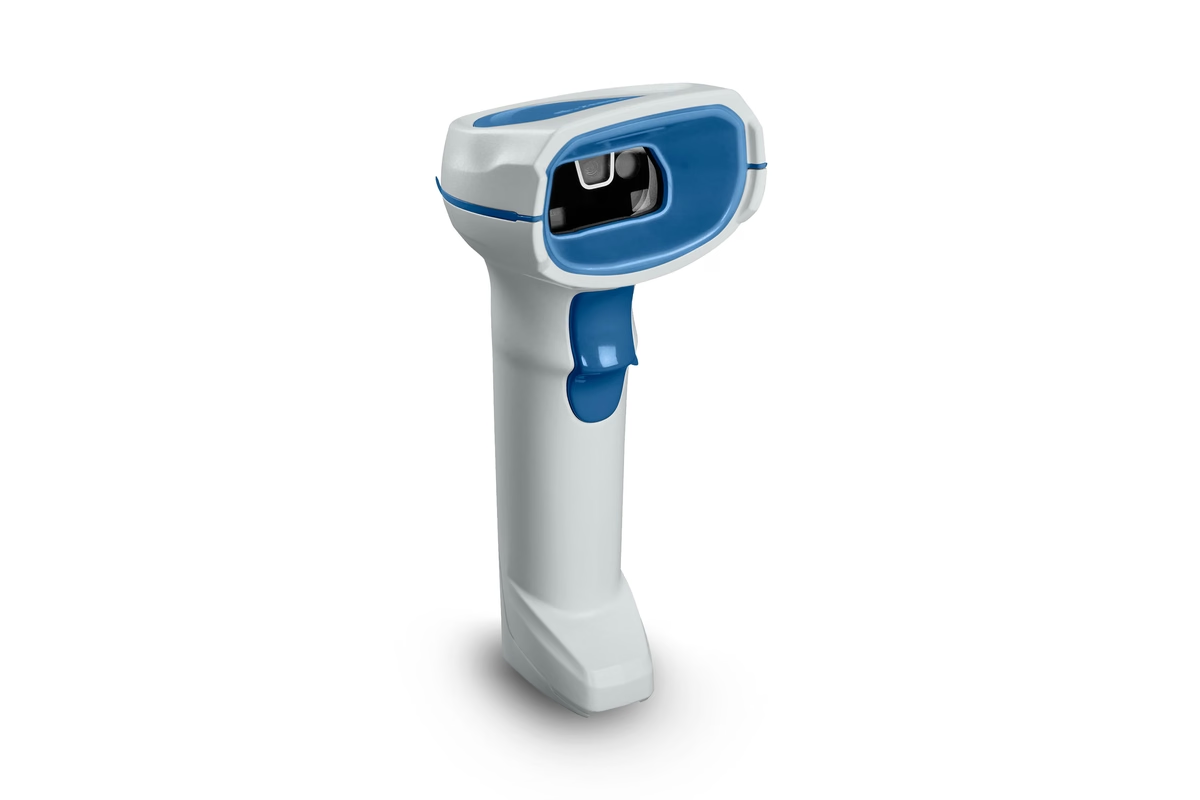
Zebra DS8108-HC
Corded healthcare handheld imager with a disinfectant-ready housing for clinician workflows.
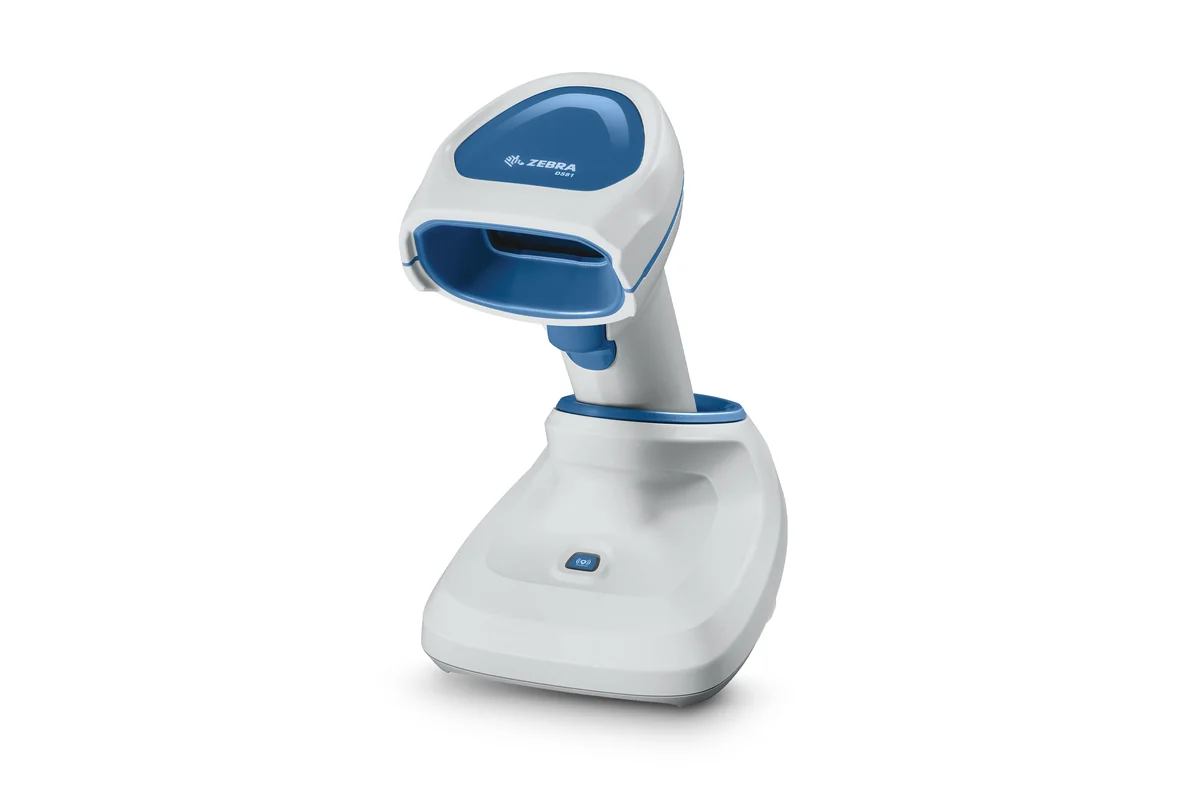
Zebra DS8178-HC
Cordless healthcare handheld imager with Bluetooth 4.0 and a disinfectant-ready housing.
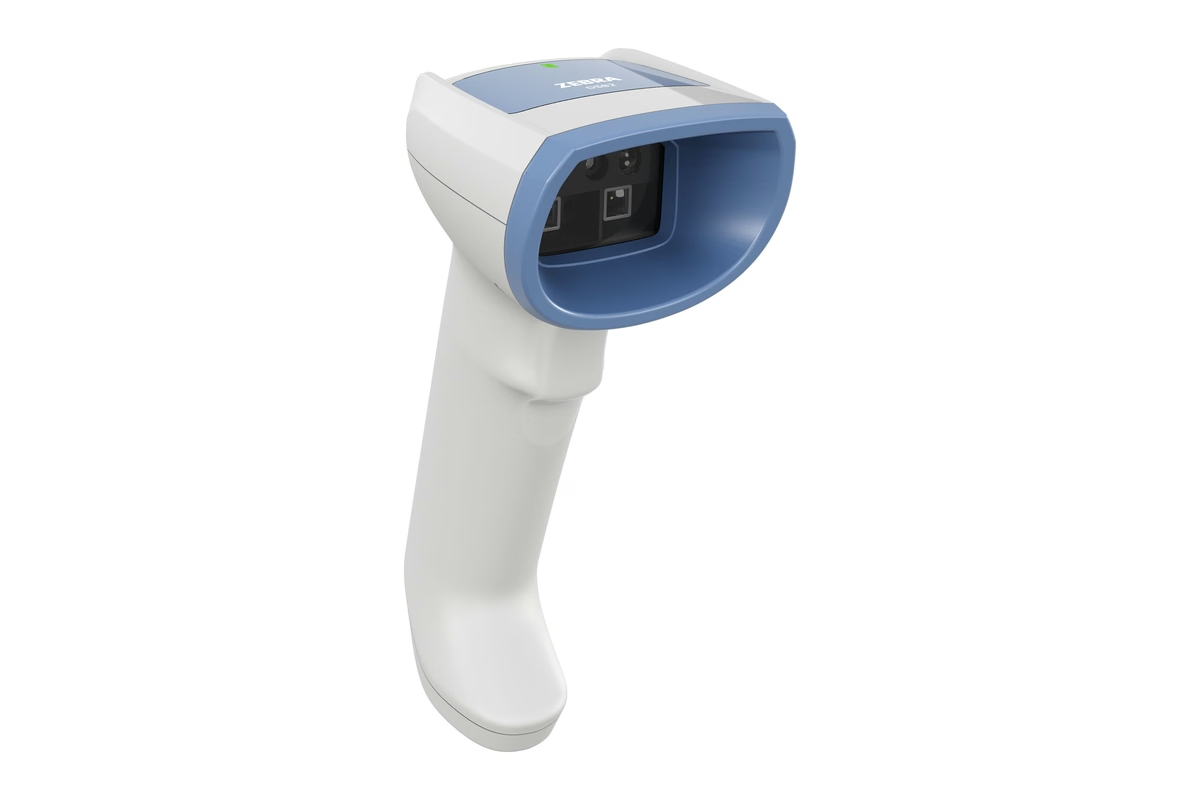
Zebra DS8208-HC
Corded healthcare handheld with a 2 MP sensor and advanced infection control, replacing the DS8108-HC.
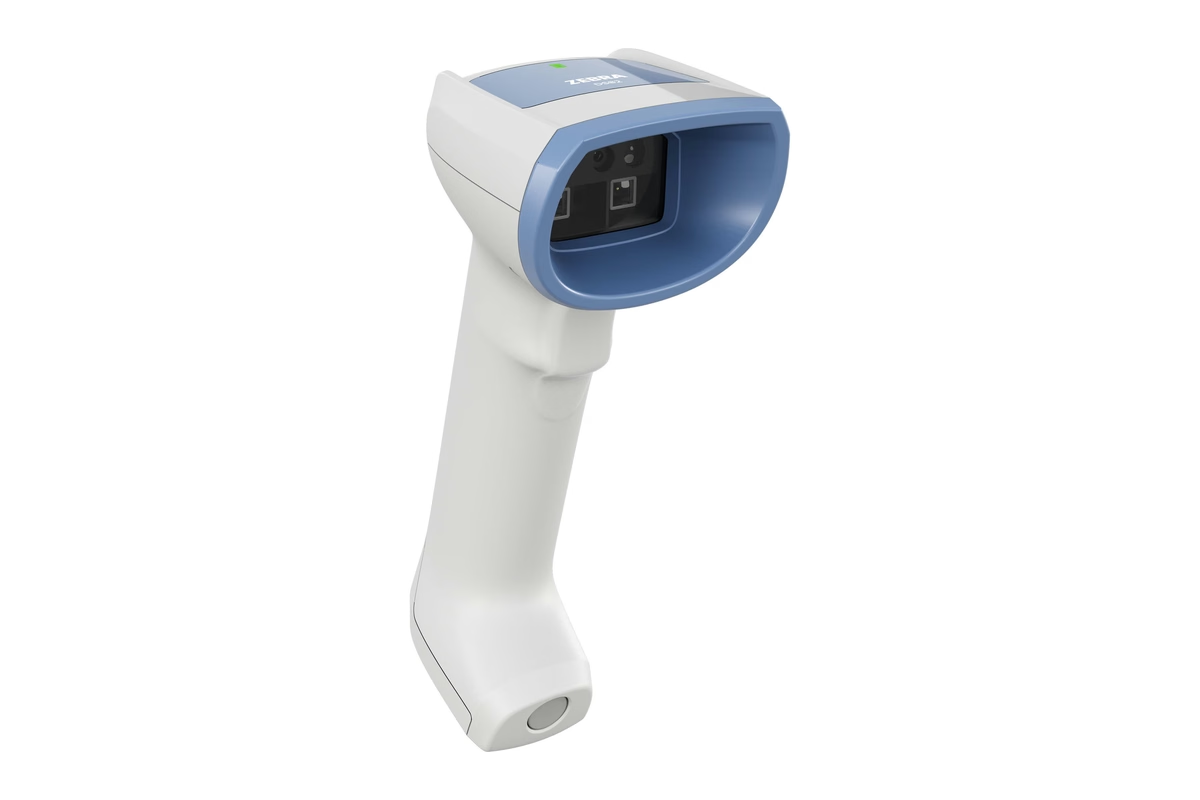
Zebra DS8288-HC
Cordless healthcare handheld with contactless charging, swappable power and 2 MP scanning.
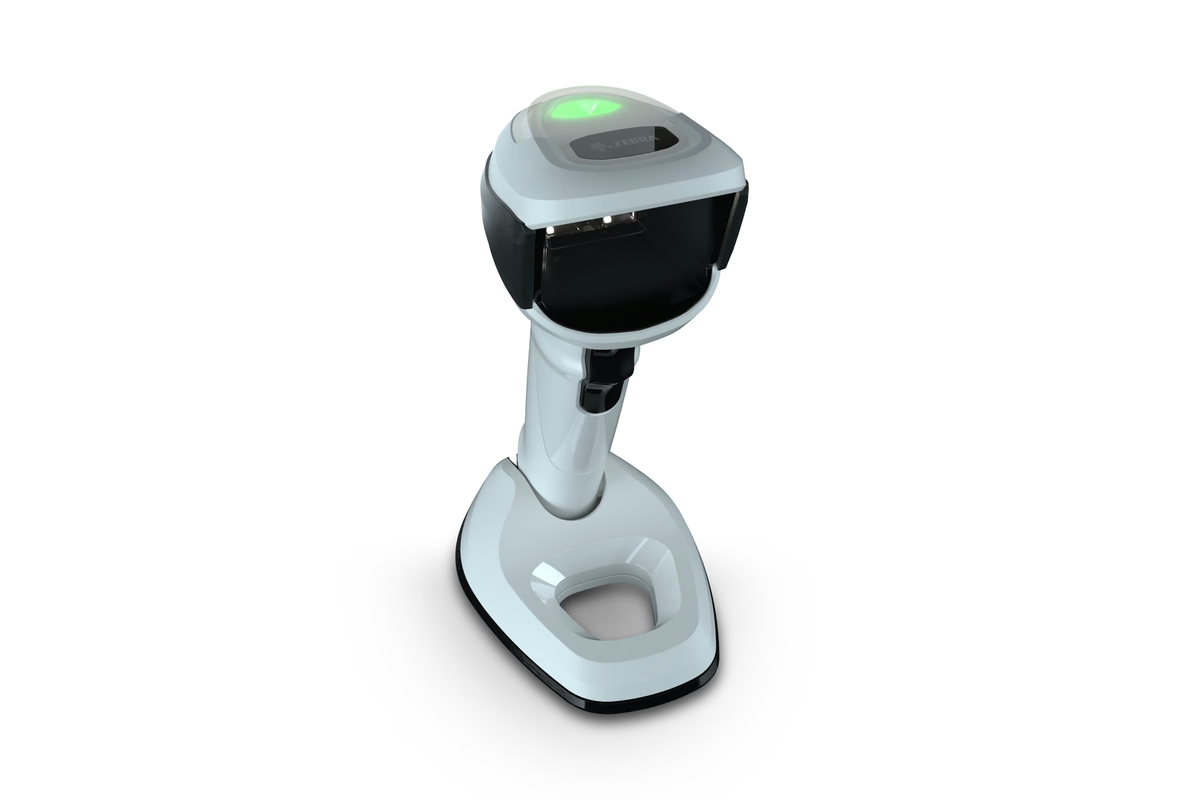
Zebra DS9908-HD
Hybrid handheld and presentation imager for labs and pharmacies, reading 1D, 2D and OCR.
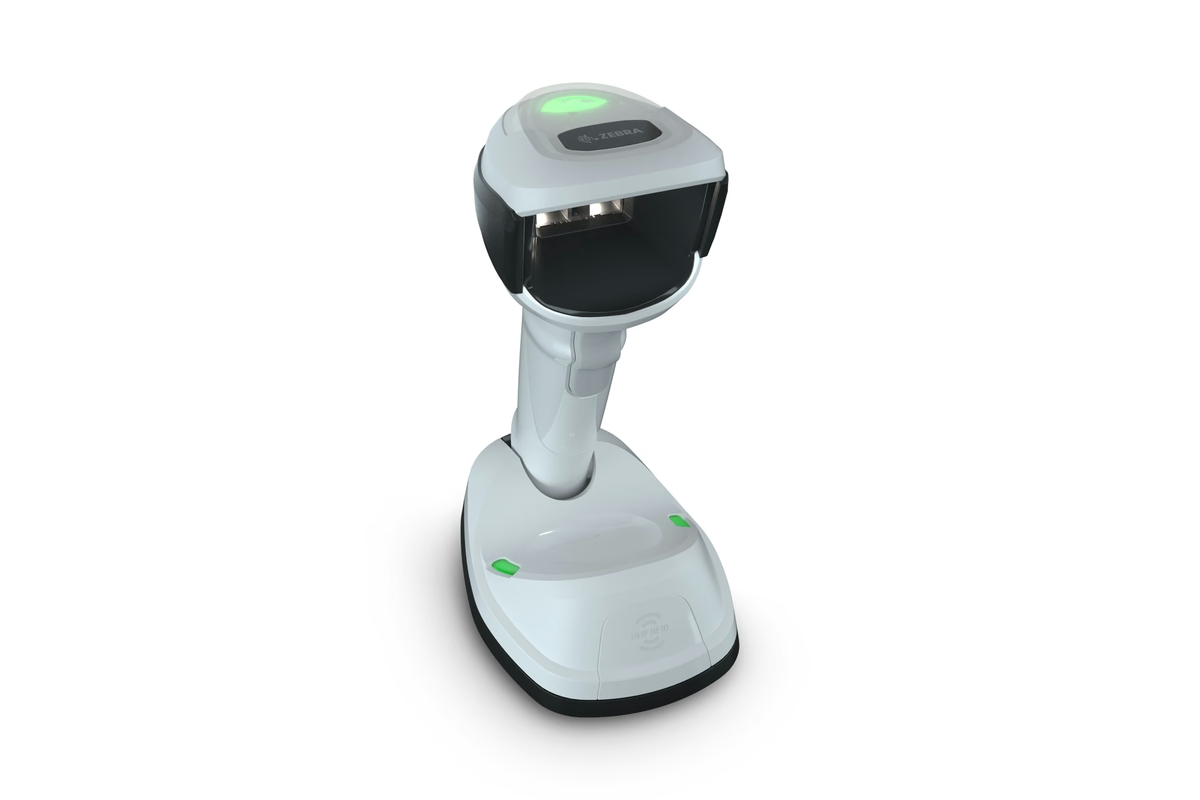
Zebra DS9908R-HD
Hybrid imager for labs that adds UHF RFID reading and writing to 1D, 2D and OCR scanning.
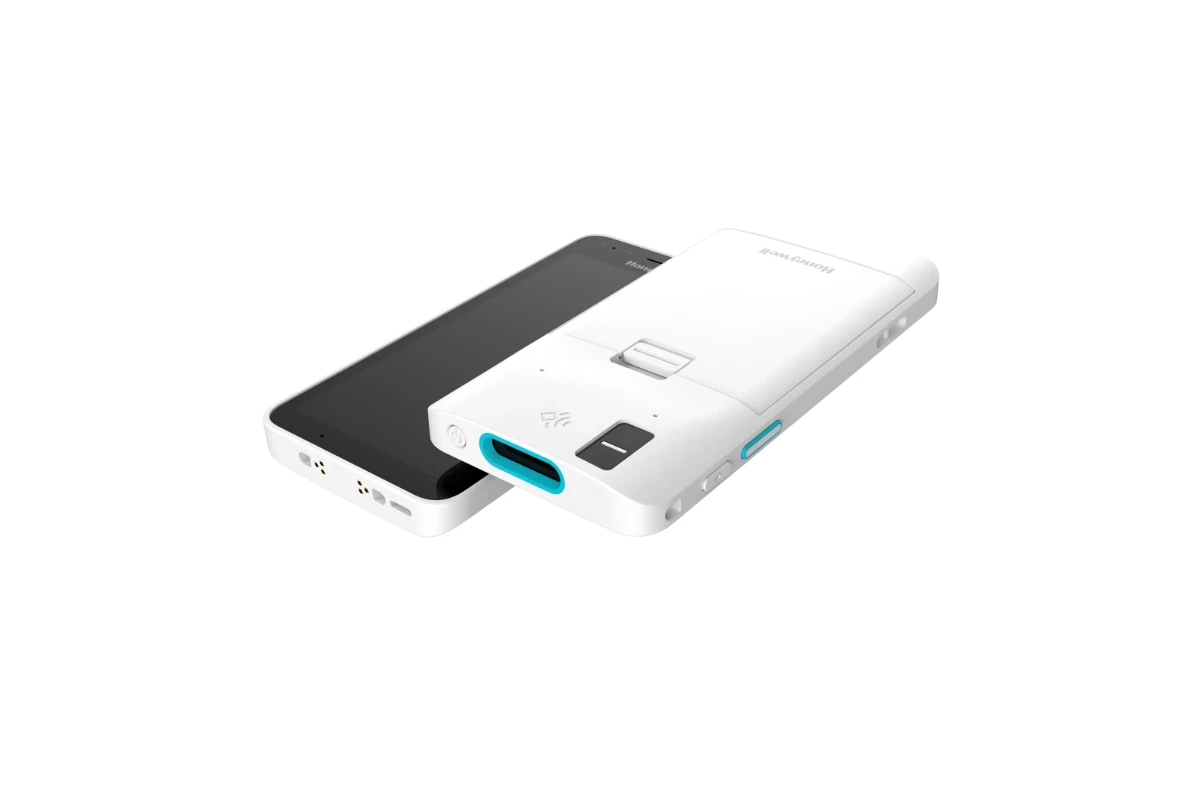
Honeywell CT30 XP HC Mobile Computer
Slim, pocketable clinical computer for clinicians who want something closer to their own phone.
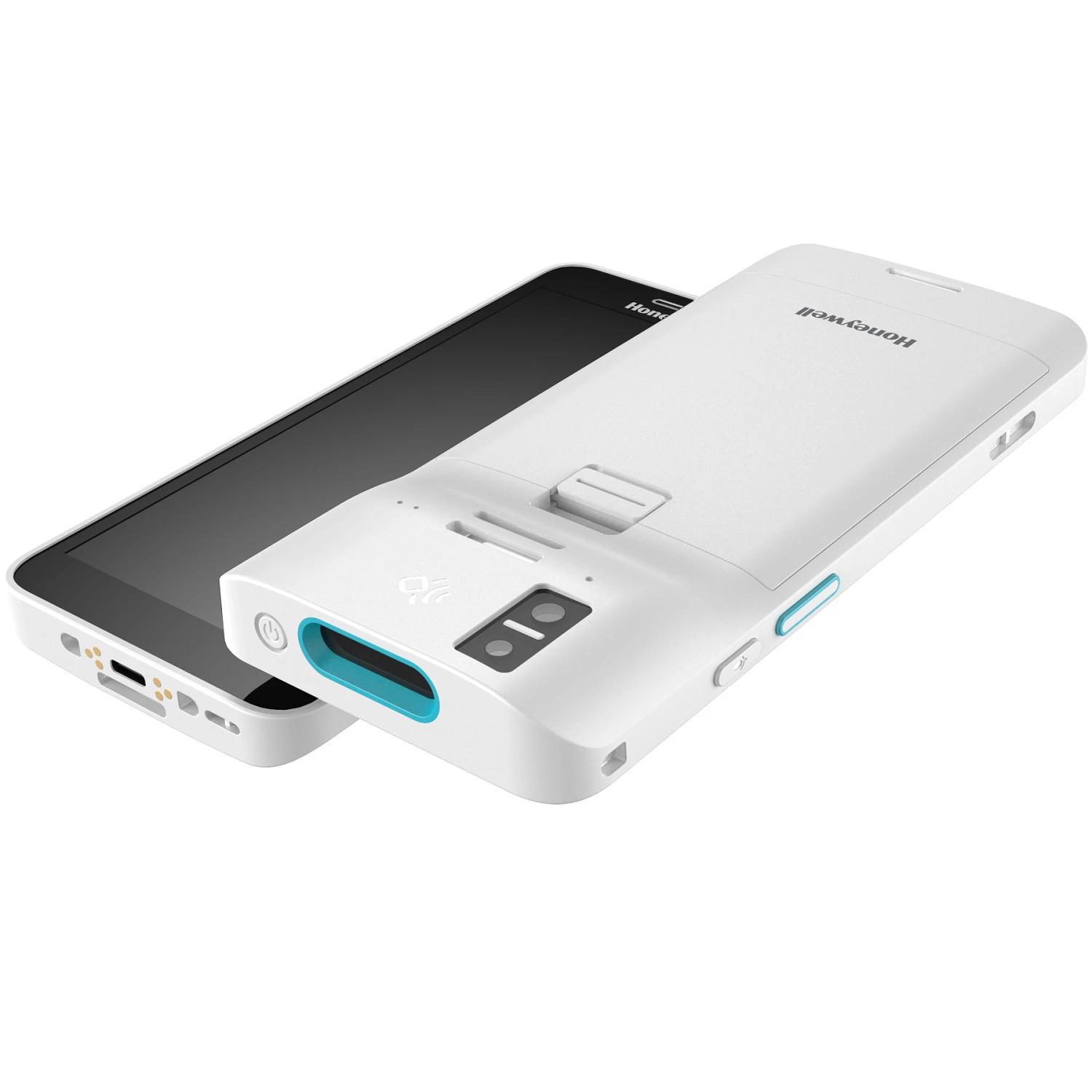
Honeywell CT37 HC Handheld Computer
The flagship clinical device. 5G, Wi-Fi 6E and a hot-swappable battery for zero-downtime shift changes.
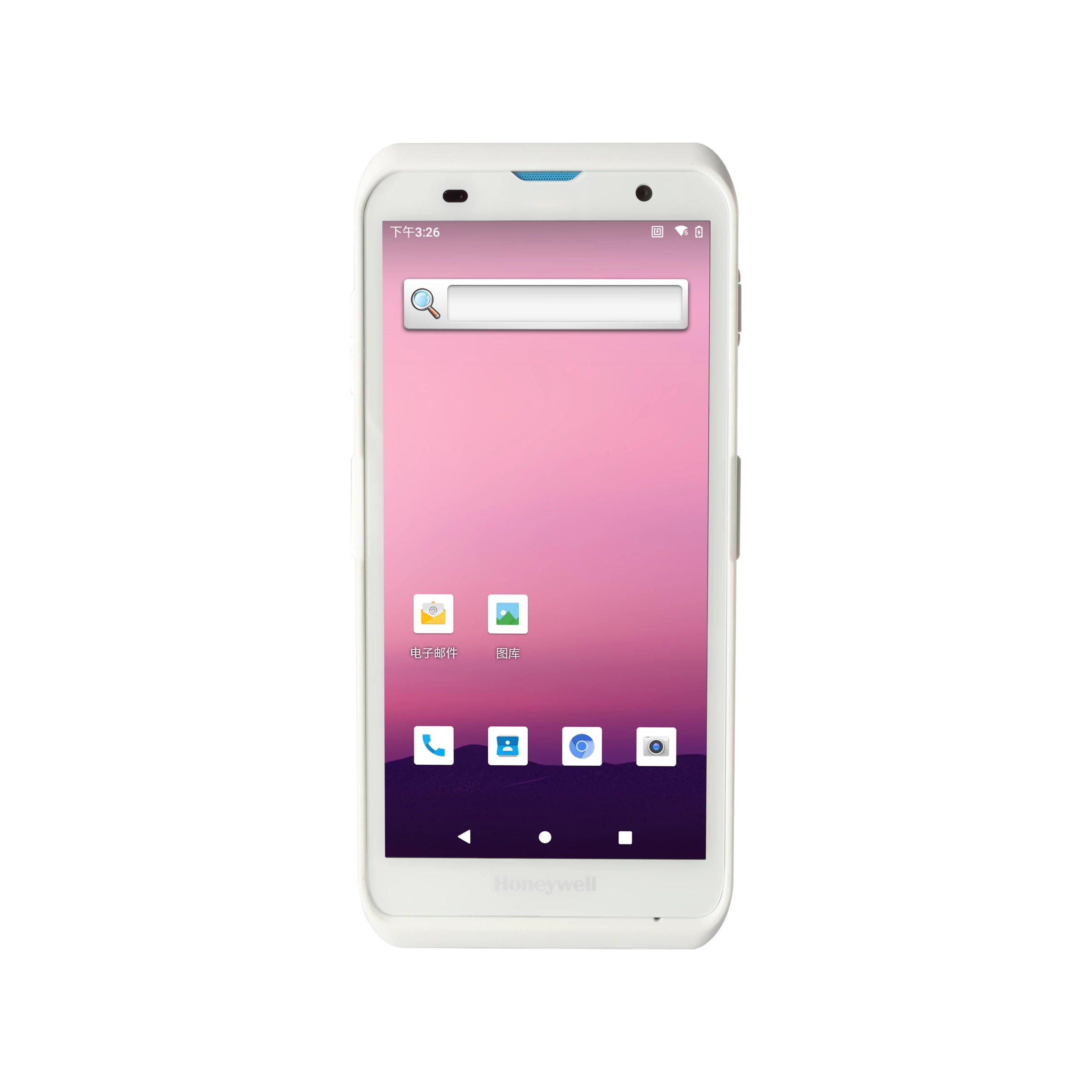
Honeywell ScanPal EDA52 Healthcare Mobile Computer
The value-tier clinical computer, with a 4,500 mAh removable battery for extended shifts.
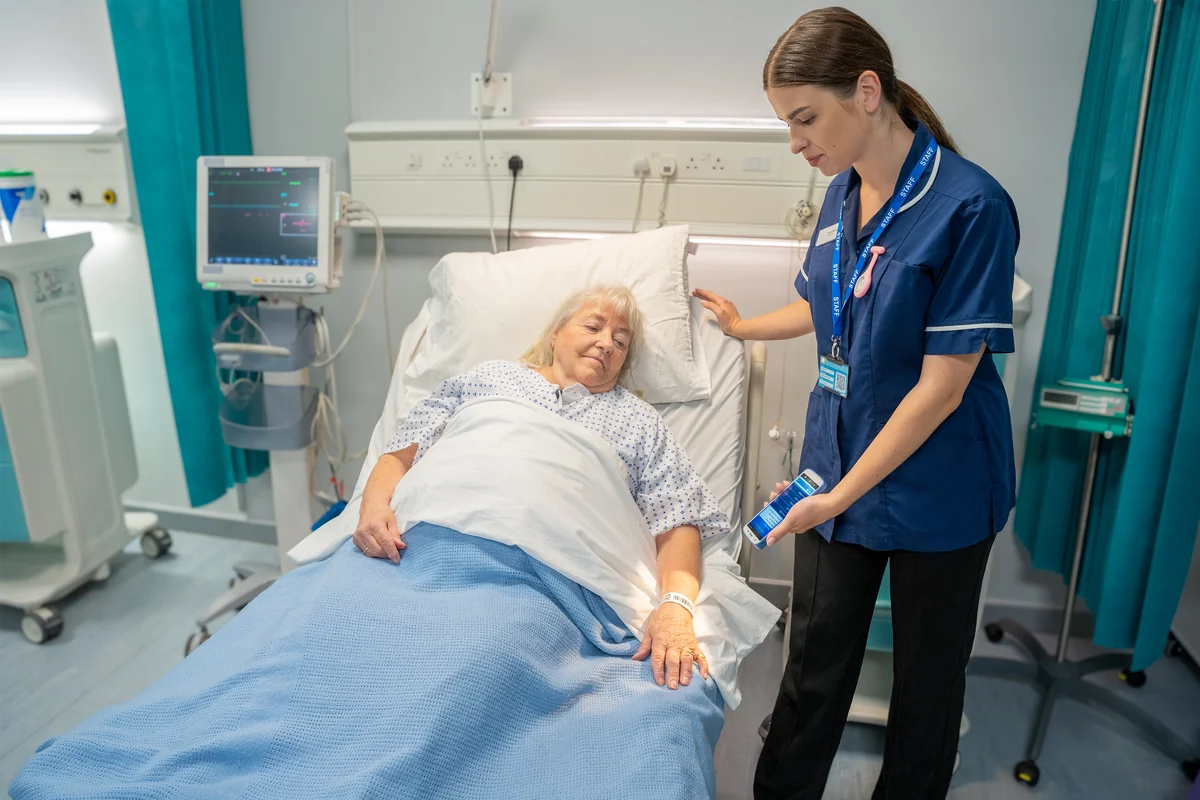
Zebra HC2X and HC5X Series
Purpose-built healthcare handhelds for bedside scanning, patient ID and specimen collection.
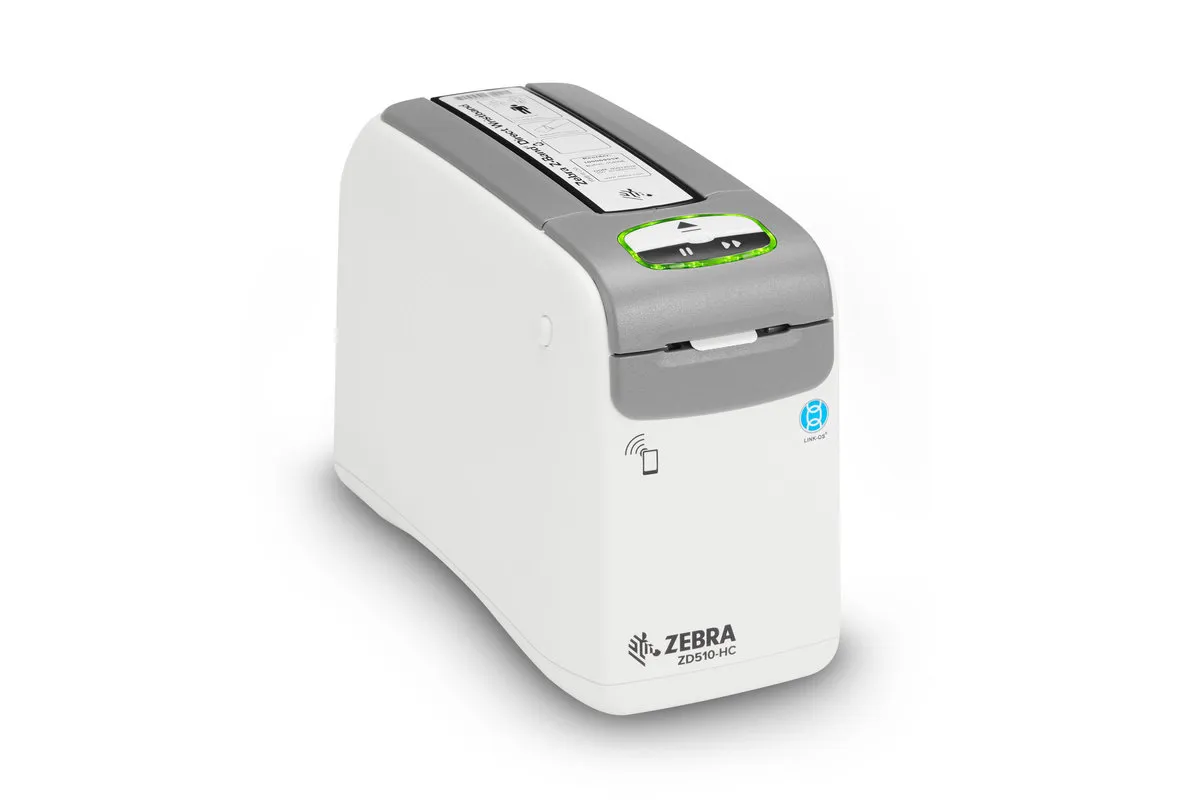
Zebra ZD510-HC
Cartridge loaded wristband printer built for patient identification at admission.
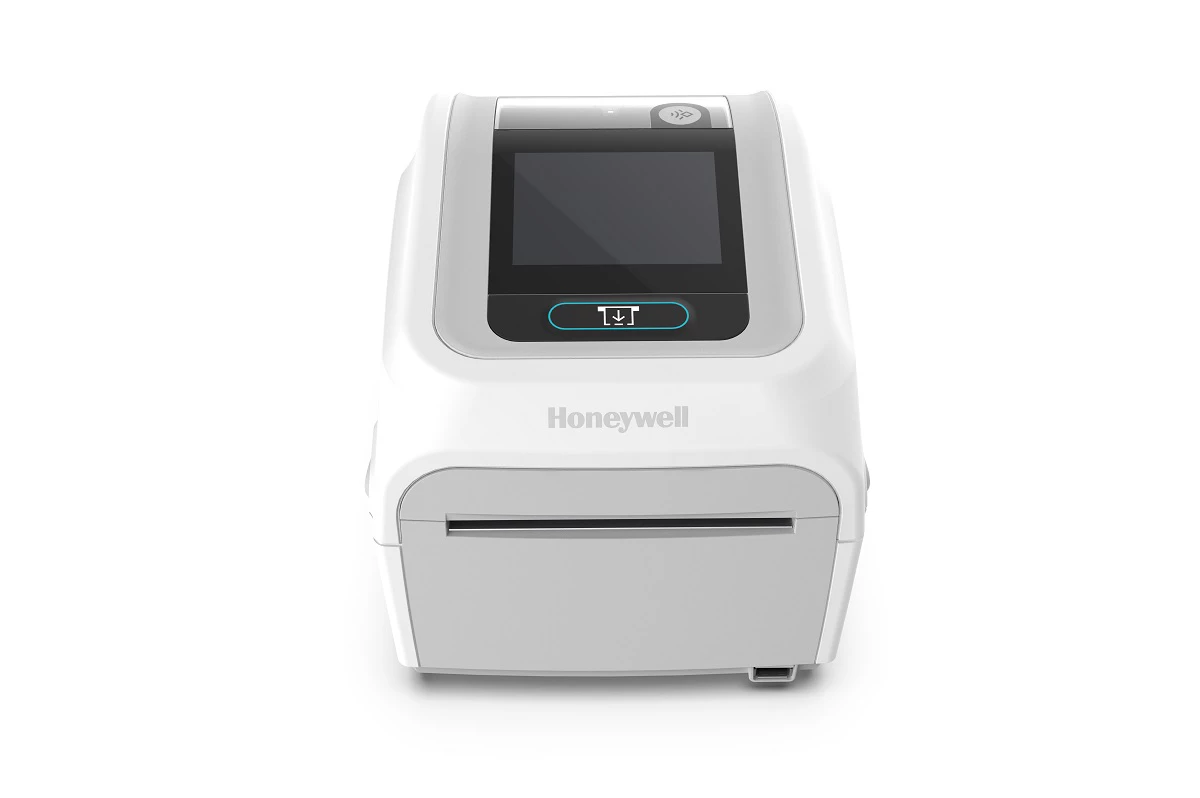
Honeywell PC45D Healthcare Desktop Printer
The PC45D in a disinfectant-ready housing, for wards where the printer is wiped down between patients.
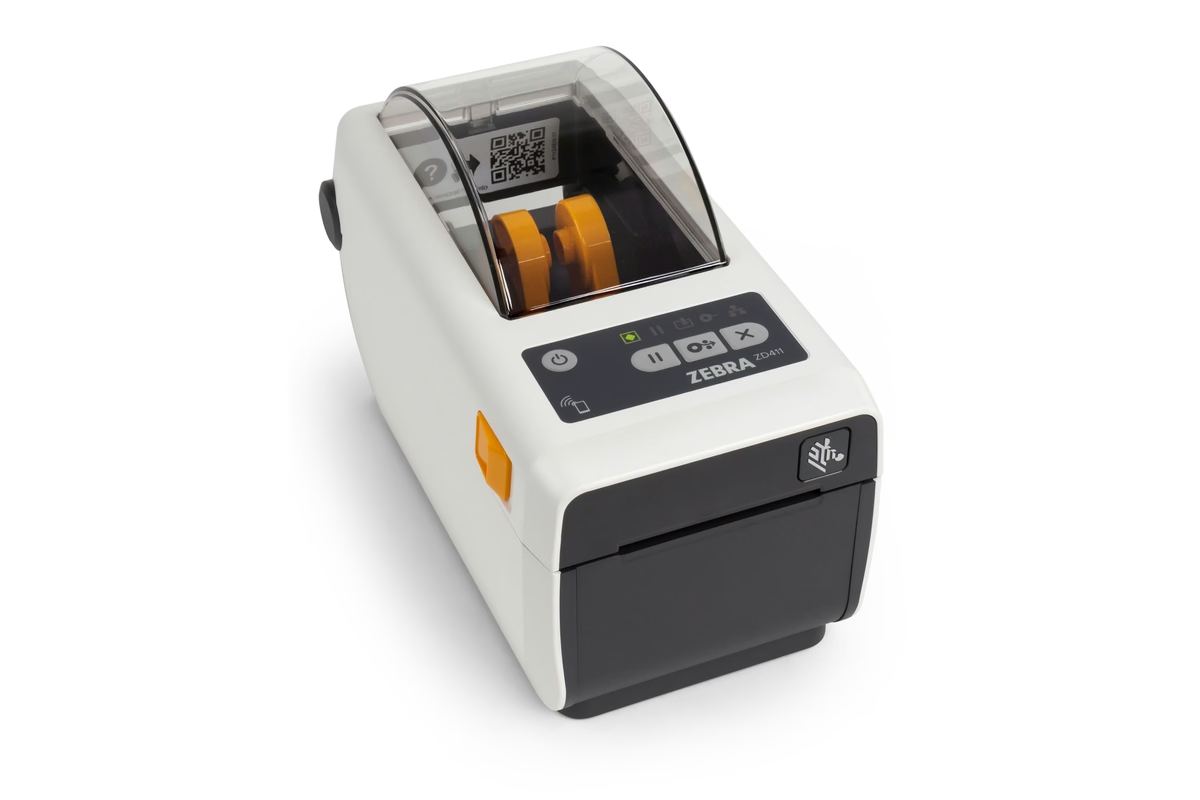
Zebra ZD411 Healthcare
Compact 2 inch direct thermal printer built for healthcare labelling and wristband printing.
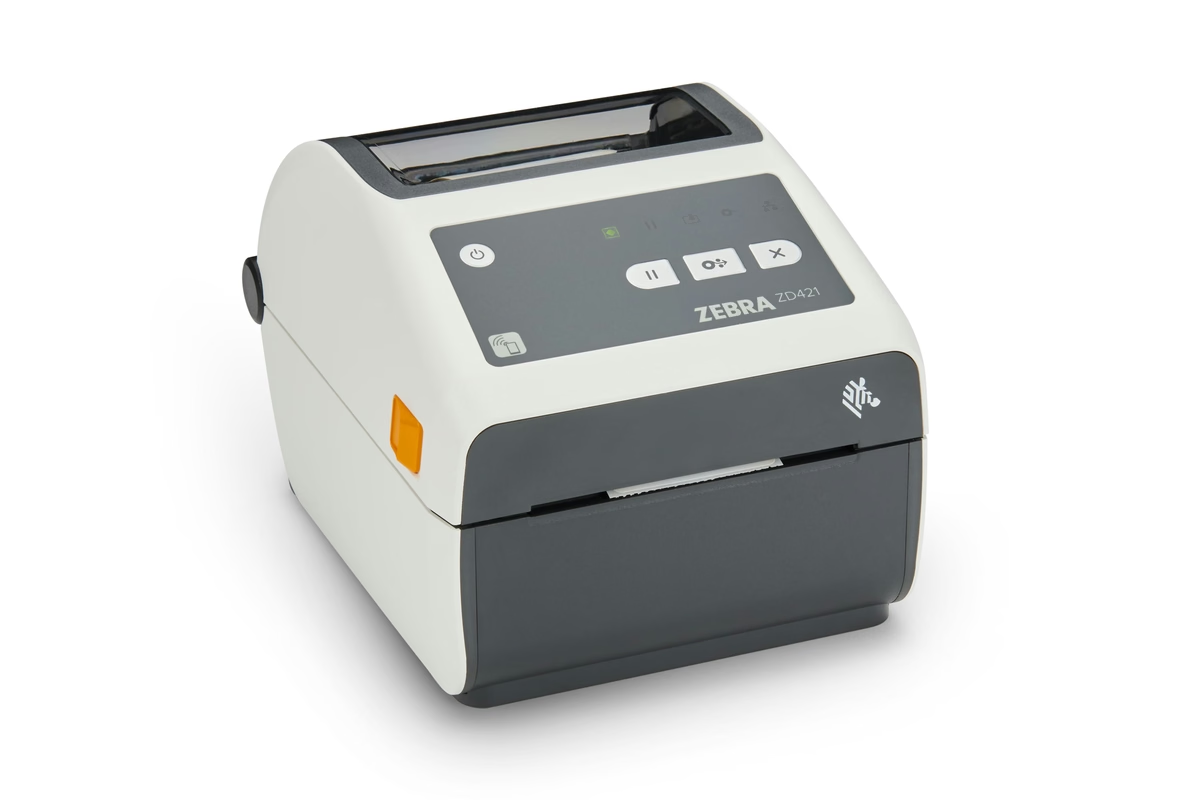
Zebra ZD421 Healthcare
4 inch healthcare desktop printer for patient ID, specimen and pharmacy labelling.
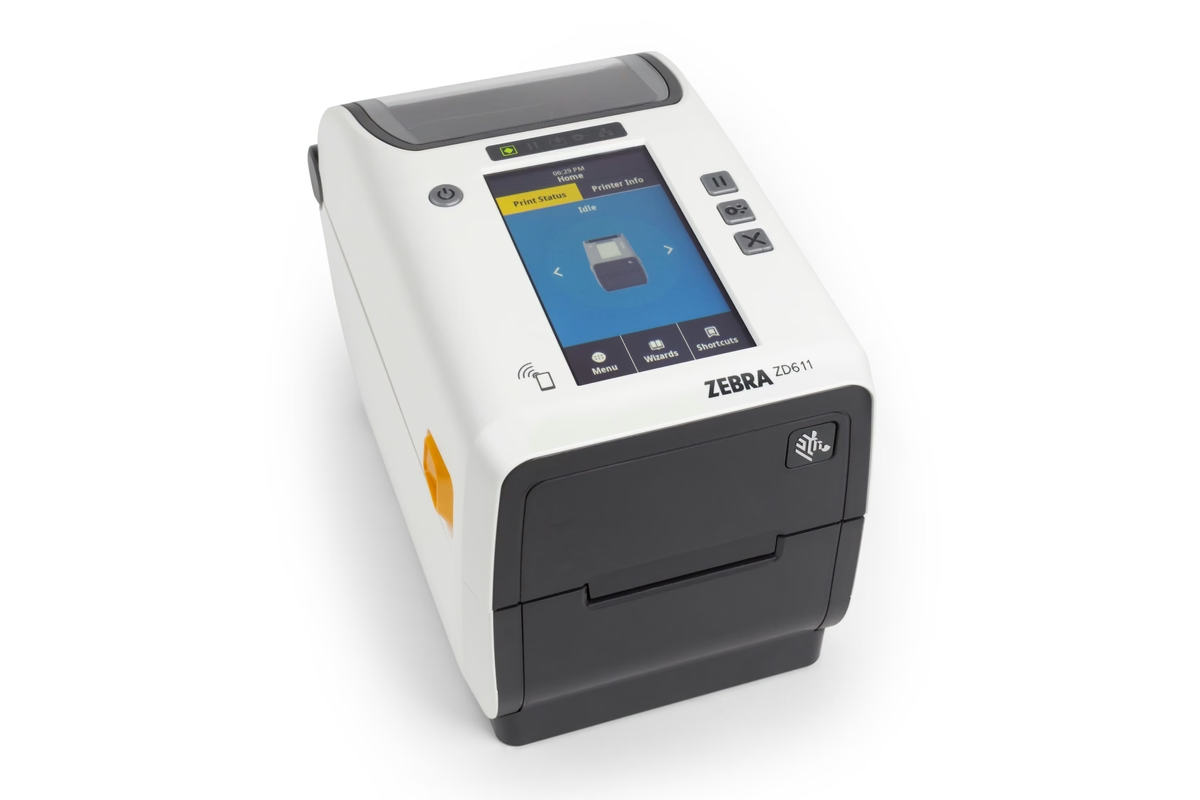
Zebra ZD611 Healthcare
2 inch healthcare desktop printer for wristbands, specimen labels and pharmacy labelling.
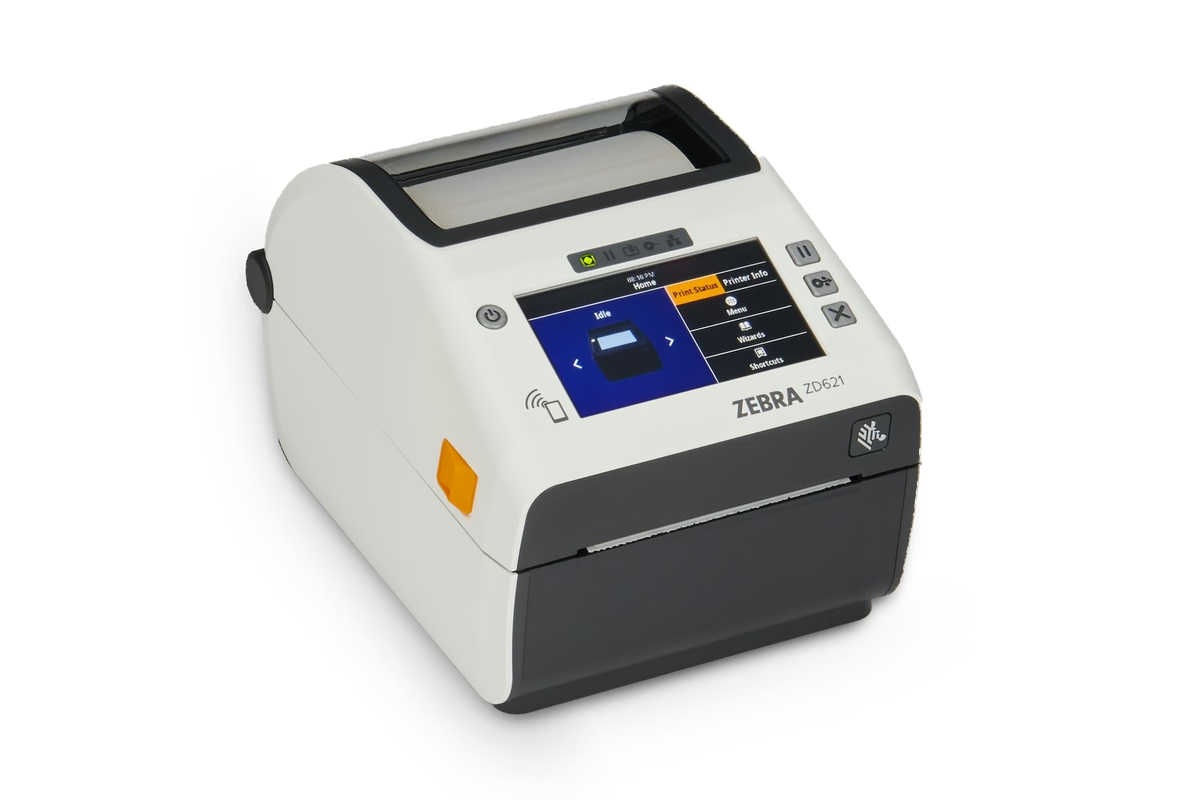
Zebra ZD621 Healthcare
4 inch healthcare desktop printer for patient ID, specimen and pharmacy labelling.
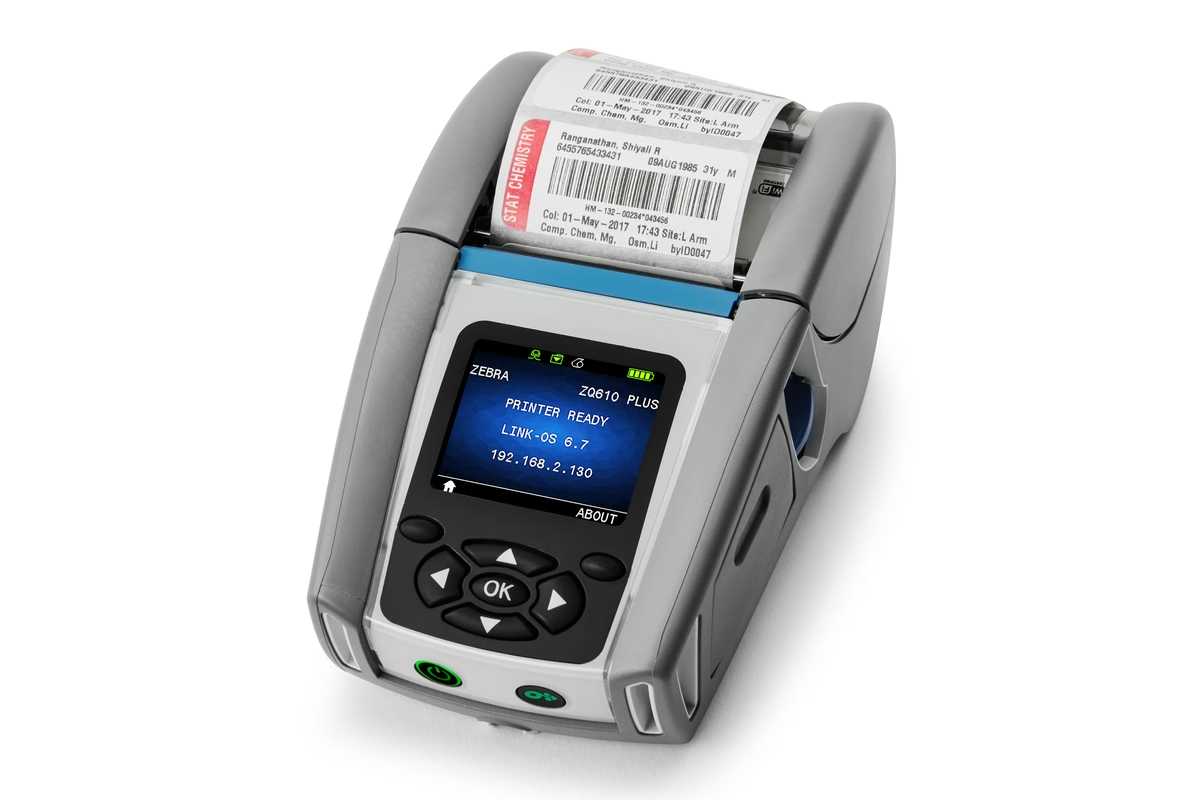
Zebra ZQ610 Plus-HC
Healthcare-grade 2-inch mobile printing at the point of care.
Labels that fit
A hospital does not run one label. It runs a wristband that has to last three days against skin and moisture, a specimen label that has to survive a fridge, and a dose label small enough for a syringe barrel that still has to scan first time.
A hospital runs several label constructions at once and they are not interchangeable. A wristband has to stay legible against skin, moisture and handling, a specimen label has to survive refrigeration, and a dose label has to be small enough to sit on a syringe and still scan first time. Ahearn & Soper's own labels work is built on synthetic constructions for lot, expiry and serialisation, plus wristbands and specimen labels made for cold storage and handling.
The failure people notice is the one on day three, not the one on day one. A band that prints cleanly and reads poorly after a shower has failed at the only moment anyone cares about.
The construction alongside is a starting point for a ward wristband, and it changes once we know the printer, the disinfection protocol and how long the band has to last.
Where identification happens in your day
A patient's day is a chain of identification moments. Each one either carries the last one forward or quietly breaks it.
Admission
The wristband is printed and put on, and everything downstream reads from it. Printed on the wrong stock or with the wrong printer, every later scan inherits the problem.
Prescribing
The order is entered and becomes the record the bedside scan will be checked against. Nothing is scanned yet, which is exactly why the record has to be right.
Dispensing
Pharmacy picks, and where the dose is not already marked at unit level, repackages and prints. This is the step that turns a hospital pharmacy into a print shop.
Administration
The wristband and the dose are both scanned before anything is given. This is the only step where the loop between what was ordered and what is happening actually closes.
Specimen
A tube is labelled at the patient rather than at the bench, and scanned when it arrives. A tube labelled from memory ten minutes later is a different specimen as far as the record is concerned.
Result
The result comes back and attaches to the same identifier the day started with. If the wristband did its job, nothing here needs a person to reconcile it.
Questions we get asked most
The questions below are the ones that actually come up, including the one nobody in this market answers straight: whether any of the Canadian barcode timelines are law. They are not.
Is a 2D barcode on dispensed medication legally required in Canada?
No. GS1 Canada's roadmap set 31 December 2025 for pharmacy and 31 December 2027 for over the counter and natural health products, but GS1 Canada's own roadmap states that Health Canada does not regulate barcoding. It is an industry timeline with no published enforcement mechanism behind it, which is a different thing from a law.
So what does the pharmacy timeline actually ask us to do?
Read, mostly. The obligation is to scan a GS1 DataMatrix and get what it carries into your system, which means GTIN, expiry date and lot number. Serial number is optional in Canada, unlike the United States and the European Union. That points spend at scanners and at fields in your host system rather than at printers.
Then why would a hospital need printers at all?
Because nobody mandated a barcode at the unit of dose. Manufacturers are not required to put one on an individual tablet or a single syringe, so hospitals that want a bedside scan to work repackage and print their own. That is the one place on this page where printer selection and symbol grading really matter.
Does scanning at the bedside actually reduce errors?
The strongest evidence is Poon and colleagues in the New England Journal of Medicine in 2010, which studied barcode scanning with an electronic medication administration record across more than 13,000 administrations. It reported about a 41% reduction in administration errors that were not timing related. It is one United States study from 2010, so read it as strong evidence rather than a guarantee for your ward.
Will a standard label printer survive on a ward?
The mechanism usually will. The housing and the media are the question, because a device wiped with disinfectant several times a shift needs a housing rated for it, and a wristband needs stock that still scans after three days of showers and sleeves. Healthcare variants exist as separate models for that reason, not as a colour choice.
Can you supply staff and visitor badges as well?
Yes. Ahearn & Soper is an Entrust Gold partner for card and ID printing hardware, and staff and visitor badging is long standing work here. Card printers are not in the product list on this page, so that conversation starts with a specialist.
Related reading


Book a walkthrough of your operation
Tell us what you run today and where the record stops matching what actually happened. A specialist reads it, asks the two or three questions that actually decide the answer, and comes back with what would change rather than a parts list.
Thanks, we have your request
A specialist will reply within one business day.
Something went wrong and your details were not sent. Please try again in a moment.